Pages

Showing posts with label understanding percent. Show all posts

Thursday, December 19, 2013

Chey's Percent Post

Percent means: an equivalent fraction out of 100. In French percent means "out of 100".

Here is how we find


0.6%


0.6% blow-up

180%

12 3/4 (0.75)%

12 3/4 (0.75)% blow up

2.)
       F          D          P
1.) 3/40 = 0.075 = 7.5%
       D          P          F
2.) 5.98 = 598% = 5  98/100
       P           D         F
3.) 0.3% = 0.003 = 3/1000


3.) D-P    To convert a decimal to a percent you multiply the number by 100
Ex: 0.024 x 100= 24%

P-D    To convert a percent to a decimal you divide the number by 100
Ex: 26%  ÷ 100 = 0.26

D-F    To convert a decimal to a fraction you take the decimal, say it, and write in fraction form.
Ex: 0.024 (say it = twenty four thousandths/ 24 out of 1000) 24/1000

F-D    To convert a fraction to a decimal you take the fraction, say it, and write in decimal form.
Ex: 7/10 (say it = seven out of ten/ seven tenths) 0.7

P-F     To convert a percent to a fraction you write the percent as a fraction with 100 as the denomenator,
and then put it lowest terms or if it is "top heavy" you make it a mixed fraction instead of an improper fraction
Ex: 24% = 24/100   24/100 = 6/25      Ex: 180% = 180/100    180/100 = 1 8/10

F-P    To convert a fraction to percent you divide the numerator by the denomenator, then you take the answer and multiply it by 100.

4.)       MENTAL MATH                                                        CALCULATOR 
                  %    |     #                                                                    60/5 = 12
                 100  |     60
         /5      20   |     12     /5


                %  |     #    
              100 |    40     
/1000      0.1 |    0.04     /1000                                                  40/1000 = 0.04


         %    |     #                        %    |      #     
        100  | 400                       100  |   400
/2        50 | 200  /2       *2       200  |   800       *2                                 400/2 = 200

50% + 200% = 250%            200 + 800 = 1000                                  400 *2 = 800
                                250%=1000                                                        200 + 100 = 1000


5.) Discount is the money you save. Sale Price is what you pay after you subtract the discount off of the original price. Total Price With Taxes is the original price with a percentage called taxes added on. In percents it is more than 100%. Ex A pair of boots is 59.99 and the tax is 13%, you are paying 113% of the original price of the boots. To find the Total Price With Taxes you find the percentage being used for taxes and then you add that too the original price.

50% off is a better deal than 25% off an already reduced price. This is because adding the 25% off's together does not make 50% off because it is 25% off the original price and then 25% off the reduced price, which is new 100%. Ex. A shirt at Walmart is $10.00 and is on sale for 50% off. A shirt at Old Navy is $10.00 and is on sale for 25% off. The next day the shirts are still on sale except the shirt from Old Navy is now an additional 25% off. Which is the better buy?

10/2 = 5 $10.00-$5.00 = $5.00 Walmart Sale Price = $5.00
($5 is the Discount and when you subtract it from the original price ($10) you get the sale price, which is $5)
10/4 = 2.50 $10.00-$2.50 = $7.50       7.50/4 = 1.875 ($1.88) 7.50-1.88 = $5.62
Old Navy Sale Price = $5.62
($4.38 is the Discount and when you subtract from the original price ($10) you get the sale price, which is $5.62) Walmart is the better buy.

Wednesday, December 18, 2013

Ceci's Percent Post


Percent means...
Percent s a equivalent fraction that's out of 100.
They picked 100 to be percent because 100 is the right number that's not too big and not too small.
the word percent and symbol % both meant out of 100, PER = out of, and CENT = 100. % = /100.

Here is how we find %,
we can use a T chart to find the %,
for example,
 we have 60 pencils,
what is 10% of 60?
what is 25 % of 60?
what is 50 % of 60?


                          PERCENT  |    PENCILS
                          100      |     60
               /10                 |                /10
                          10       |     6


                         PERCENT   |    PENCIL

                          100      |     60

              /4                   |                /4
                          25       |     15


                        PERCENT   |    PENCIL

                          100     |     60
             /2                   |                /2
                          50      |     30


Representing Percent


a)180%


b)0.6%


c) 12 3/8      


Converting percents


fraction -- decimal -- percent
88/50
88/50 = 1.76
because 88 divide by 50 equals = 1.76,
1.76/1 * 100/100 = 176/100 or 176%


decimal -- percent -- fraction
0.0064 * 100 = 0.64 or .64%
0.0064 = 64 /10 000


 64        16       4
---   /   ----  =  ---
10000      16      625


percent -- decimal -- fraction
0.3%
0.3 / 100 = 0.003
0.003 = 0.003 / 1000
0.003 = 3 / 1000


understanding percent,

combining percents,

decimal, fraction 

4.

1) 20% of 60
   10% = 6
   because, you move the decimal  60. to the left once,
   10 x 2=20
   6 x 2=12

   calculation:
   20/100
   0.20 x 60 = 12

2)0.1% of 40
   0.1 x 1000 =100
   40/1000 = 0.04

   calculation:
   0.001 x 40 = 0.04

3)250% of 400
   250 x 400 = 100000
   100000 / 100 = 1000
 
   calculation:
   250/100 = 2.5
   400 x 2.5 = 1000


5.
Tips: % OFF = discount,what you save
 sale price = what you pay  

question 7 from pg. 149 (text book)
 A herd of 100 caribou was moved to a new location. the population increased by 10% the first year and then increased by 20% the second year.

a) find the population after the second year.


first year:
10 + 100 = 110
110     100     1.1
---  /  ---  =  ---  =  1.1
100     100      1

1.1 X 100 = 110

     OR

10% of 10010% + 100% = 110%
110/100 = 1.1
1.1 x 100 = 110


second year:
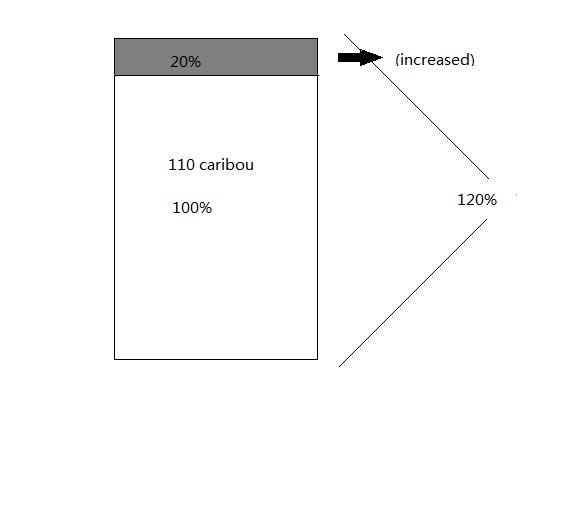
110 caribou
20 + 100 = 120
120   100    1.2
--- / ---  = --- = 1.2
100   100     1

1.2 X 110 = 132

   OR

20% of 110
20% + 100% = 120 %
120 / 100 = 1.2
1.2 x 110 = 132

The population after the second year is 132.


b) Explain why there was not a 30% increase in population over the two years.

 There was not a 30% increase in population over
 two years because, the percent had changed. we
 need to find 10% of 100 first, when we get the
 answer we have to  find 20% of that number.The
 number had changed, we are not looking for the
 percent of 100 so, the final answer would
 change too.


 SHOW YOU KNOW ....

What is the final sale price at each store? Which is a better buy?
Explain your thinking.

Store A: 50% off one day only

Store B: 25% off one day followed by 25% off the reduced price the

second day


For Example
The total price of the jacket is 200 dollars

store a)


50% off means half off
half of $200 is $100

    OR 

50% = 0.5
0.5 X 200 = $100


store b)

the first day...


75% = 0.75
0.75 X 200 = $150

    OR 

25% of 200 = 50
200 - 50 =$150


the second day...


75% = 0.75
0.75 X 150 = $112.5

     OR 

25% of 150 = 37.5
150 - 37.5 = $112.5


The final price for store a) is $100, and for sore b) is $112.5. Store a) is a better choice because, store a) is 50% off which means it is half of the regular price. Store b) is 25% off from the regular price, and 25% off from the reduced price, the number had changed smaller so, the discount would change smaller too. If the discount  gets less then, the sale price gets more.


 convert percents, decimals and fractions....


Allison's Percent Post

PERCENTS

What does percent mean?
Per(out of) cent(one hundred)

Why 100%
Its 100% because its just right it's not too high and not too low of a number. It's a number that can be easily seen. The percent sign
( % )
 represents 100 the line equals the 1 and the 2 circle are the 0's.

There are improper fractions or top heavy. What it means is that the numerator (part) is greater than the denominator (whole)

205/100 represents
205%, 205 out of 100, and 2 wholes.

What does....
10% means? 10% means 10/100, 1/10 (equivalent fraction)
50% means? 50% means half, part/whole, 20/40 or 50/100
25% means? 25/100 1/4 (one quarter)
1% means?  1/100 1 out of 100
100% means? all, whole, everything, 40/40 or 100/100


Representing Percent's: 180%, 0.6%, 12 3/8%

a) 180%


b) 0.6%


c) 12 3/8%


Convert each decimal to a percent and a fraction


Convert each fraction to a decimal and a percent


Convert each percent to a decimal and a fraction


Percent of a number
1) 20% of 60
  Mental Math:
            %    |      #                   Calculation:
          100   | 60                      20/100= 0.2
/10     10     | 6                         0.2x60=12
x2       20    | 12
          

2) 0.1% of 40   
 Mental Math                        Calculation:
             %   |    #                   0.1/100= 0.01
             100| 40                     0.01x40= 0.4
 /100      1   |  0.4             
/10       0.1  |  0.4     


3)   250% of 400
       Mental Math

                    #      |   %                            Calculation:
                    400  |  100                           250 ÷100= 2.5
            x2   800   |   200   x2                   2.5x400=1000 
           ÷4    200   |   50     ÷4
                   1000 |  250


Combining percent's

When you are working with money you're expecting to have discounts, sale prices, and total price with taxes. 

Discount-what you save
Sale price- what you pay

When you are trying to find the sale price you take the regular price and subtract it from the discount to get the sale price.

                                     Regular price- Discount= Sale price

When you are trying to find the total price including taxes you add up the items or item you bought to find the total price. Now you have to add the tax to the total price. If the tax was 13% you would add 13% to the total price which is the all, the whole, the 100%
100+13= 113
You then divide 113 (the total price including tax) by 100.
113 ÷100=1.13
 The 1 represents the total price and the 13 represents the tax.            Now you multiply 1.13 by the total price (e.g. 147.25)
1.13x147.25= 166.3925 or 166.39
Total price including tax= $166.39


4.4 Page 149
Question 7:
A herd of caribou moved to a new location. The population increased by 10% for the first year and then was increased by 20% in the second year.

a) Find the population after the second year.
b) Explain why there was not a 30% increase of the over the two years.


a)  


 100+10= 110     110 ÷100=1.1       1.1x100= 110


100+20=120      120÷100=1.2       1.2x110= 132
After the second year there was 132 caribous.    


b) There was not a 30% increase of the two years because the 100% changed when the second year increased it by 20%. In the first year the population of the caribou was 100, now that the second year came by instead of the population being 100 anymore it increased which is 110% (the new 100%).


Show you know

What is the final sale price at each store? Which is a better buy?
Explain your thinking.
Store A: 50% off one day only.
Store B: 25% of one day followed by 25% off th e reduced price the second day.

Store A: 50% off a $300.00 sofa.
Since the discount is 50% (what you save)off the $300.00 sofa you can divide it by 2 since 50% is half of the regular price.
300÷2= 150 or        50÷100=0.5 0.5x300=150
The total price is $150.00


Store B
First day: 25% off a $300.00 sofa.
So now you are trying to find out what 25% of $300.00 is (what you are saving)
25÷100= 0.25     0.25x300= 75
25% off 300.00 is $75.00(what you are saving)

300-75=$225.00 (what you are paying) or
75÷100=0.75    0.75x300= $225.00 (the new 100%)


Second day
 25% off a $225.00 sofa.
Now you have to find what you are saving 25% off of $225.00

25÷100= 0.25    0.25x225.00= $56.25
You are saving $56.25
Now you have to find what you actually have to to pay. Since the discount is 25% off the sale price will be 75% of the regular price(it's 75% because 25+75= 100%) which is $225.00.
75÷100= 0.75   0.75x225.00=168.75
You are now paying $168.75 for the sofa.


Conclusion
For the conclusion, store a has a better price than store b because in store a you only pay $150.00 and you are saving $150.00 also. In store b you are paying $168.75 off of the new price and you are only saving $56.25. So if you buy from store a you are saving $18.75 of store b.yay. Overall Store A is a better buy than Store B.


Theresa's Percent Post

What is a Percent?


Percent is a fraction out of 100.
Here's how we find an equivalent fraction out of 100.

9/10 = 90/100
9 x 10 = 90
10 x 10 = 100

Why 100%? 100 is used because it's just right. It's also a number that's easily seen.

Percent was made by the French. Per means "out of" in french and Cent means "100". Together they make "out of 100". The percent sign %, the line in the middle represents 1 and the two little circles symbolizes the two zeros from 100.

Improper or Top Heavy fractions are fractions that have a greater numerator than the denominator. 

205/100 = 2 wholes, 205 out of 100, 205%
5/4 = 5 out 4, 125 out of 100, 125%

100% means all, whole, everything, 100/100, 6/6.
10% means 10/100, 1/10.
50% means half, part/whole, 50/100 or 20/40.
25% means 25/100, 1/4, one quarter.
1% means 1 out of 100, 1/100.

Representing Percents


Converting Decimals to Percents to Fractions

1) 26%

Decimal: 26% ÷ 100 = 0.26

Fraction: 0.26 / 1
0.26 x 100 / 100
26 / 100

2) 7 / 10

Decimal:÷ 10 = 0.7

Percent: 0.7 x 100 = 70%

3) 0.024

Percent: 0.024 x 100 = 2.4%

Fraction: 0.024 / 1
0.024 x 100 / 100
2.4 / 100


Percent of a Number

Mental Math                                                                    Calculator

                                                1) 20% of 60

             %  |  #                                                                  20 ÷ 100 = 0.20
           100 |  60                                                               0.20 x 60 = 12
÷5         20 |  12     ÷5
        20% of 60 = 12                                                       20% of 60 = 12

                                                 2) 0.1% of 40

              % | #                                                                  0.1 ÷ 100 = 0.001
           100 | 40                                                                0.001 x 40 = 0.04
÷100    10 |  4     ÷100
÷10     0.1 |  0.4     ÷10                                                   0.1% of 40 = 0.04
      0.1% of 40 = 0.4

                                                 3) 250% out of 400

            % | #                                                                    250 ÷ 100 = 2.50
          100 | 400                                                              2.5 x 400 = 1000
x 2     200 | 800    x 2
÷4        50 | 200   ÷4                                                      250% of 400 = 1000
          250 | 1000
 250% of 400 = 1000


Combining Percents

When working with money, you will often see discounts, sale prices or regular prices.

Discount - what you save
Sale Price - what you pay

To find the sale price,       Regular Price - Discount = Sale Price

To find the total price with taxes,

1) Calculate the total price of item(s) that were bought.

4.4 Pg. 149
7. A herd of 100 caribou was moved to a new location. The population increased by 10% the first year and then increased by 20% the second year.

a) Find the population after the second year.
b) Explain why there was not a 30% increase in population over the two years.


a) The population of the caribou herd after the second year was 132.

When finding the increase of the caribou, you add 100 + 10 because "increasing" means having more than you had before. So that means your answer will be more than what you started with.
The next thing you need to do is to take the percents from the question and convert them to a decimal. You do this by dividing the percent by 100.
Lastly, you have to multiply the decimal by the total amount of caribous.

100 + 10 = 110        110 ÷ 100 = 1.10        1.10 x 100 = 110

100 + 20 = 120        120 ÷ 100 = 1.20        1.20 x 110 = 132


b) There was not a 30% increase in population over the two years because the 100% changed when the second year increased by 20%. In the beginning, the population of the caribou was 100 but after the first year it became 110. 110 became the new 100%.

4.4 Pg.148 Show You Know

What is the final sale price at each store? Which is a better buy? Explain your thinking.

Store A: 50% off one day only
Store B: 25% off one day followed by 25% off the reduced price the second day

Example: you want to buy a $60 pair of boots.

Store A

For one day, there is a 50% off discount of $60.
The discount is what you save and the sale price is what you pay. Since it is just 50%, we can just half the number.


60 ÷ 2 = 30

The reduced price and what you now pay is $30 (without taxes).

Store B

Day 1: 25% off of $60
First, let's find the discount.

25 / 100    25 ÷ 100 = 0.25
0.25 x 60 = $15

Now that we've found the discount, we then have to find the sale price. We can find the sale price by subtracting the discount from the 100%. (25% of of $60)

$60 - $15 = $45

The sale price and what you pay is $45.

Day 2: 25% off of already reduced price ($45 new 100%)
We do everything again but with a new 100%.

25 / 100    25 ÷ 100 = 0.25
0.25 x 45 = $11.25

$45 - $11.25 = $33.75

Final Sale Price:
Store A - $30.00
Store B - $ 33.75

Which is a better buy?

Store A is a better buy because they're offering a $30 pair of boots while compared to Store B offering a pair of boots at $33.75.
You'll save $3.75 if you shop at store A compared to Store B. At Store B, you'd have to find the percent of a percent which means there will be a new 100%.


Pam's Percent Post

Notes:
  • Percent means/is an equivalent fraction that is out of 100.

ex. 9/10 x 10/10 = 90/100 or 90%.

  • Percent is out of 100 because "It's just right" and it's "easily seen", and it could also be a friendly number.
  • The percent symbol (%) includes two zeros and the division sign. The division sign is the 1__ and the two zeros are _00 making it 100.
  • In French, the word percent is split into two parts, "per" being "out of" and "cent" being "100".
  • You may be asked, is 205% still a percent? even though it's past 100? It still can be. It's 205/100.
  • Percent can be an "improper fraction" meaning that the numerator is greater than the denominator in a fraction. Another word for this could be "Top Heavy". ex. 5/4
100%- means all, whole, everything.

50% - means half, part/whole, 20/40 or 50/100

   %    |  apples
  100  |   40
    50  |   20
*We divided both sides by 2.

10% - is 10/100

   %    |  apples
  100  |   40
   10   |    4

25% means 25/100 or 1/4
 
   %    | apples   
 100   |    40
   25   |    10
*We divided both sides by 4.

1% - means 1 out of 100 or 1/100
*To find 1% of something, divide the number by 100.

   %    | apples
   100 | 40
     1   | 0.4
*We divided by 100 on both sides (what you do to one side, to do to the other).

Representing Percent


180 %


____________________________________________________________________________


0.6%

__________________________________________________________________________


    12 3/8 %
____________________________________

FRACTION - DECIMAL - PERCENT

3/40   Numerator ÷ Denominator = Decimal
                           ÷ 40 = 0.0.75  x 100   =   7.5  or 7.5%
                                            1     x 100        100
_____________________________________________________________________________________               

DECIMAL - PERCENT - FRACTION

0.0064    0.0064  x 100      0.64  or 0.64%        0.0064
                   1       x  100     100                             10000

_________________________________________________________________________

PERCENT - DECIMAL - FRACTION

0.3% ÷ 100  =  0.003    3     
                                         1000

_________________________________________________________________________

                                                PERCENT OF A NUMBER

MENTAL MATH                                                                     CALCULATOR

20% of 60 -             %  |  #                                                    20   20 ÷ 100 = 0.2
                             100  | 60                                                  100
                (÷ 5)       20  | 12                                                
                                                                                             0.2 x 60 = 12

* 0.2 is 20% and you must find the decimal of 
the percent by dividing the percent by 100.
                                                                                                                                                        

0.1% of 40  -          %   |  #                                                  0.1     0.1 ÷ 100 = 0.001
                              100 | 40                                                100
              (÷ 1000)   0.1 | 0.04
                                                                                            0.001 x 40 = 0.04
* when dividing 10, 100, 1000, etc, you
move the decimal place by how much zeros
there are in the number you are dividing by.
When there is no decimal, the decimal is always
on the right side of the ones place value.
     
                                                                                                                                                        
250% of 400 -        %  |  #                                                  250           250 ÷ 100 = 2.5
                             100 | 400                                               100
                     (x2)  200 | 800
       (÷ 2 from 100)    50 |  200                                              2.5 x 400 = 1000


800 + 200 = 1000

                           
___________________________________________________________________________

5.                                                 COMBINING PERCENT                                                     

Question 7 -page 149                                                            
                                                                                             
A herd of 100 caribou was moved to a new 
location. The population increased by 10%
the first year and then increased by 20% the
second year.
a) Find the population after the second 
year.

b) Explain why there was not a 30% increase
in population over the two years.
__________________________________________________________________________

WORK :


first year

                  - The caribou population (the whole or 100%) was increased by 10%, meaning that 10% was added to the whole, so you could just find 110%.
   
            100%         - caribou
            + 10%        -increase in population
            110%

             110            110 ÷ 100 = 1.10
             100                                            1.10 x 100 = 110


    second year


- This is now the new percent since you are trying to find
a percent of a percent. You try to find 20% of 110 caribou
instead of the original 100 caribou. The 20% must be added into
the 100% (110 caribou)
or only use one step:

             100%             120 ÷ 100 = 1.20    1.20 x 110 = 132
            + 20%                                    1
             120%               On the second year, there were 132 caribou.


explanation

There was not a 30% increase over the years because if it was
30% increase, it would of been 130 caribou. This was not the same
and we did not get the same answer as a 30% increase because in the process
of finding 20% of 110 caribou and adding the 20%, we also had a new 100% or
a new all. This is finding a percent of a percent.

__________________________________________________________________________

Show You Know pg. 148

What is the final sale price at each store? Which is a better buy?
Explain your thinking.
Store A : 50% one day only
Store B : 25% off one day followed
by 25% off the reduced price the
second day

example price for both BAGS : $50

Store A
for one day:
50% off (discount ) of $50.
Since this is the discount, the discount is what you save, while the sale price is what
you pay. You could just find the sale price but since this is 50%,
you could just half the number at this point.

50÷2 = 25

$25 is the reduced price, or the amount you are now paying (not including taxes).


Store B

first day:
25% off of $50

 25       25 ÷ 100 = 0.25
100

0.25 x 50 = $12.50

Since this price is the discount, we try to find the sale price. The
sale price is 75% (subtracting 25 off of 100).
Then we subtract $12.50 from $50 = $37.50
You pay $37.50.

* You could have just found 75% of $50 rather than finding 25%
then subtracting that number from the regular price.

second day:
25% off of $37.50 (new 100%)

 25      25 ÷ 100 = 0.25
100

0.25 x 37.50 = $9.38

$37.50 - $9.38 = $28.12
conclusion

In conclusion to this math problem, store a would have been the better buy.
Store A is offering $25 for a bag while Store B is offering $28.12 on the second day.
If you choose Store A over Store B, you'll save $3.12 compared to Store B's price.
Again, for Store B, it's different from Store A because Store B includes you to find
a percent of a percent meaning there will be a new 100%.

 Overall, Store A has a better buy.

_________________________________________________________________________


Wikipedia

Search results

Creative Commons License